

ZKX Helix
MFA Evolved: Safer. Smarter. Faster.
Home » ZKX Helix
What is ZKX Helix?
How Helix works in your environment
Helix delivers cutting-edge multifactor authentication and identity access management. With our patented zero-knowledge proof technology, Helix is far and away more secure than other solutions on the market.
1. Deploy Helix
Install Helix as a self-hosted identity engine within your infrastructure.
2. Connect environment
Use LDAP or REST to integrate Helix with your existing directory or access workflow.
3. Enroll devices
Pair your smart device with Helix using the Helix Authenticator app.
4. Apply adaptive access
Set policies that adjust MFA levels based on risk, location, time of day, device identity, or IDS/EDR signals.
5. See measurable reduction
Track fewer resets, fewer authentication failures, and fewer identity-based incidents.
6. Easily scale up and down
Scale the same configuration across multiple customers or devices to ensure consistent security.
Join our exclusive trial program today
We're looking for users who want to stay on the cutting edge of cybersecurity by participating in our 90-day trial of Helix.
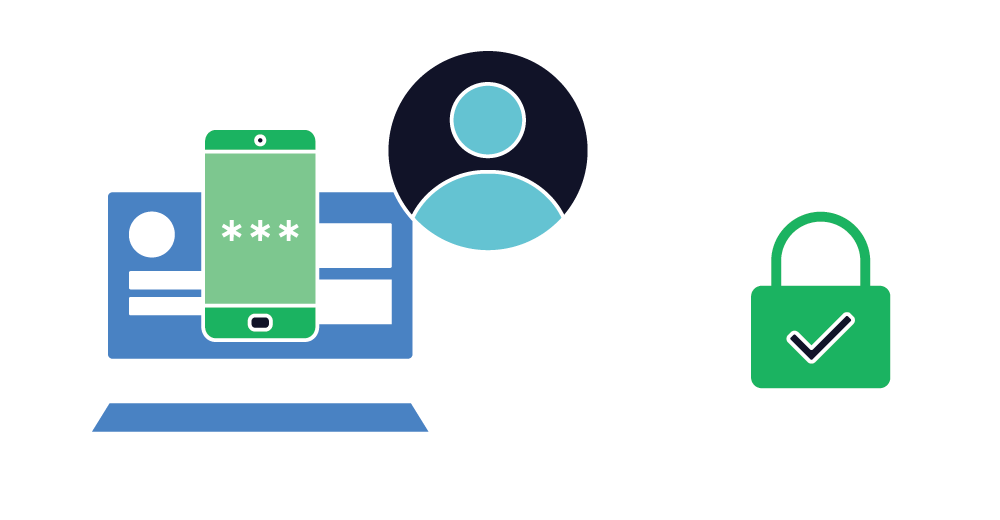
Helix proves identity without handing attackers the keys
Most authentication systems still depend on things that can be stolen, phished, replayed, intercepted, or abused. Helix takes a different approach.
Using zero-knowledge proof technology, Helix can verify that an entity is trusted without exposing the secret behind that trust. That entity could be a person, a device, a privileged user, a machine, an OT asset, a workload, or a high-risk transaction.
One platform. More precise access decisions.
Helix brings authentication, policy, and access control closer to the places where risk actually happens. Instead of treating every action the same, Helix can apply stronger verification when the user, device, resource, or request demands it.
Simple for the user. Strong under the hood.
Helix starts when a user, device, machine, or system requests access to something protected. The platform checks identity, device, context, and policy. If the request meets the right conditions, access can be approved. If risk is higher, Helix can step up verification, deny access, or trigger revocation.
Simple flow
- #1 Request: A user, device, machine, or system tries to access a protected resource.
- #2 Proof: Helix verifies trust using zero-knowledge proof technology.
- #3 Policy: The request is evaluated based on context, risk, identity, device, and resource.
- #4 Decision: Access is granted, stepped up, denied, or revoked.

An organic approach to cybersecurity
Unlike other cyber companies, we don’t treat cyber as a mechanistic, predetermined set of inputs and outcomes. We view cyber as more of an organism – a complex system that is unique, responds to its environment, and evolves over time. This view of cybersecurity rests on the three foundational pillars: Technology, Policy, and Culture.
Technology
Dive into the details of how Helix works and what makes our security superior.
Policy
Explore how Helix uses policy to maximize security and drive transformation.
Culture
Learn how the ZKX design philosophy ensures Helix adapts to your culture – not the other way around.
Helix use cases
Built for the identity problems legacy tools miss
Enterprise Access
Strengthen login and access control for users, devices, privileged accounts, and sensitive applications.
Ecommerce Fraud Prevention
Verify high-risk transactions and suspicious account activity without adding friction to every customer interaction.
OT & IoT Access Control
Protect connected equipment, critical systems, and operational workflows with identity-based controls.
Privileged Access Revocation
Cut off access when trust changes, especially during employee termination, reassignment, or suspicious activity.
Scam & Deepfake Verification
Give users a way to verify trusted people or interactions when voice, video, or caller identity may be spoofed.
Non-Human Identity
Extend proof and policy to machines, workloads, agents, and connected systems that traditional MFA was not built to protect.