

Helix Technology
ZKX Helix: MFA That Does More
Protect users, devices, machines, transactions, OT systems, and sensitive resources with stronger proof and smarter policy.
MFA That Does More Than Verify a Login
ZKX Helix is built to secure access without exposing the authentication data attackers want to steal. It pairs users with their trusted devices, uses zero-knowledge proofs to protect authentication in use and in transit, and applies policy where access risk actually happens.
Helix is not just another prompt layered on top of the same credential problem. It is a patented authentication and access control platform built to protect people, devices, machines, sessions, and high-value resources with stronger proof.
Helix Key Benefits
- Security is upheld even when user credentials are phished, leaked, or otherwise compromised
- Enables enforcement of access policies at macro and micro scales
- Patented MFA simultaneously validates users and their devices for improved security and network access visibility
- User/Device pairs are continually authenticated in a process transparent to the end user
Built for Humans, Devices, Machines, and Critical Systems
Helix is our next-gen MFA solution, and was designed for a broader identity surface than traditional MFA. It can support access control for human users, trusted devices, privileged workflows, connected systems, OT and IoT environments, ecommerce transactions, and emerging non-human identities.
This gives organizations a single authentication foundation that can apply across different environments without forcing every use case into the same login-only model.
Join Our Exclusive Trial Program Today
We're looking for users who want to stay on the cutting edge of cybersecurity by participating in our 90-day trial of Helix.
User-Device Pairing Makes Access Harder to Fake
Traditional MFA often verifies something a user knows, has, or approves. Helix goes deeper by binding the user and device together during enrollment and authentication.
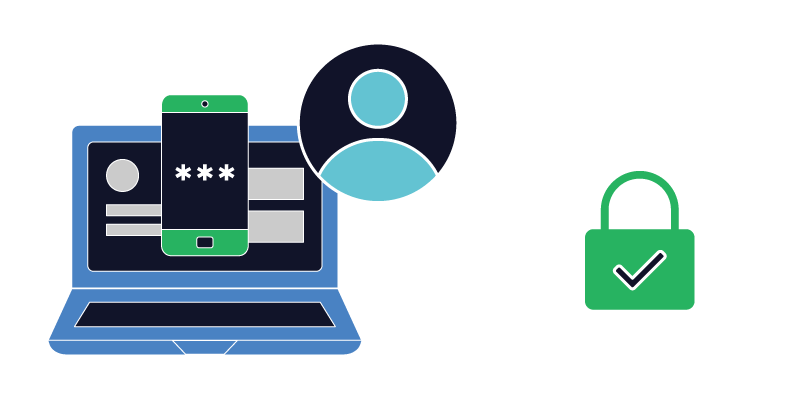
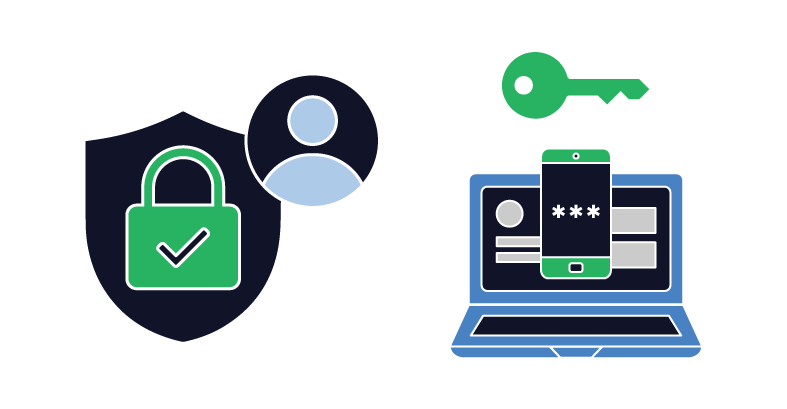
When the user needs access, Helix processes the user’s MFA credentials and combines them with the device’s key fragments to temporarily reconstruct the private keys needed for authentication. The reconstructed keys are then used to complete the authentication process and are not left sitting around as reusable secrets.
The result is a stronger trust model. The user, the device, and the authentication event all have to line up before access can move forward.
Preserve data privacy with zero-knowledge proofs (ZKPs)
Preventing private keys from being stored in one obvious place is only part of the problem. Authentication data also needs to stay protected while it is being used.
Helix uses zero-knowledge proofs so a user-device pair can prove trust without transmitting the private key or exposing the underlying credential data. The Helix server can verify that the authentication is valid without learning the secret behind it.
Each proof is unique to the authentication event, which helps prevent replay and reduces the value of intercepted data. Even when authentication happens repeatedly throughout the day, Helix is designed to keep the sensitive data behind that proof concealed.
How ZKX Helix Works
Helix turns authentication into a proof-driven process instead of a credential exposure problem. The experience can stay simple for users, while the underlying system applies stronger controls in the background.
Backed by Patented Technology
Continual Authentication Without Constant User Interruption
Helix supports continual, transparent authentication so trust can be maintained beyond the first login. Once a user-device pair is verified, Helix can continue producing cryptographic attestations as the user moves through protected systems and resources.
This allows security teams to maintain stronger assurance without forcing users to constantly stop, open an app, approve a prompt, or repeat the same action. Verification can happen in the background, while policy determines when stronger friction is actually needed.
The goal is not to remove security friction entirely. The goal is to make friction purposeful.

Policy & Access Control
Authentication Is Only the Start
Helix is built to support more than a yes-or-no login decision. It can help enforce access based on who is requesting access, what device they are using, what resource they want to reach, and what risk is attached to the action. That matters because modern identity risk does not stop after sign-in. Access may need to be stronger for a privileged command, a sensitive transaction, an OT system, a machine identity, or a workflow crossing organizational boundaries.
By connecting authentication with policy, Helix helps organizations protect access at a more precise level than traditional MFA.
Helix Technology FAQs
How does Helix use zero-knowledge proofs?
Helix uses zero-knowledge proofs to let a user-device pair prove trust without transmitting the private key or exposing the underlying authentication secret.
What is user-device pairing?
User-device pairing means Helix ties authentication to both the user and the trusted device. The correct user inputs and device-held key fragments must work together before access can be approved.
How does Helix reduce risk from stolen credentials?
A stolen password, ID card, or device is not enough on its own. Helix requires the right combination of user credentials, trusted device fragments, proof, and policy before access can proceed.
Can Helix authenticate continuously?
Yes. Helix can support continual, transparent authentication so verified identity can be maintained beyond the initial login without forcing constant user interaction.
Can Helix protect more than users?
Yes. Helix is designed for users, devices, machines, workloads, OT and IoT systems, privileged workflows, and other non-human identities.

Built With the Future in Mind
Identity systems need to last longer than the current attack cycle. Helix was designed around a flexible cryptographic foundation that can evolve as security requirements, computing capabilities, and threat models change.
ZKX’s architecture is intended to support future-ready authentication, including post-quantum-readiness considerations as the broader security ecosystem continues to move in that direction. This is not about chasing buzzwords. It is about building an authentication layer that can adapt instead of locking customers into brittle assumptions.
See the Technology Behind Helix in Action
Helix brings zero-knowledge proofs, user-device pairing, continual authentication, and adaptive policy into one practical access control platform. Bring us the workflow, system, transaction, or identity risk you need to protect, and we’ll show you how Helix works.